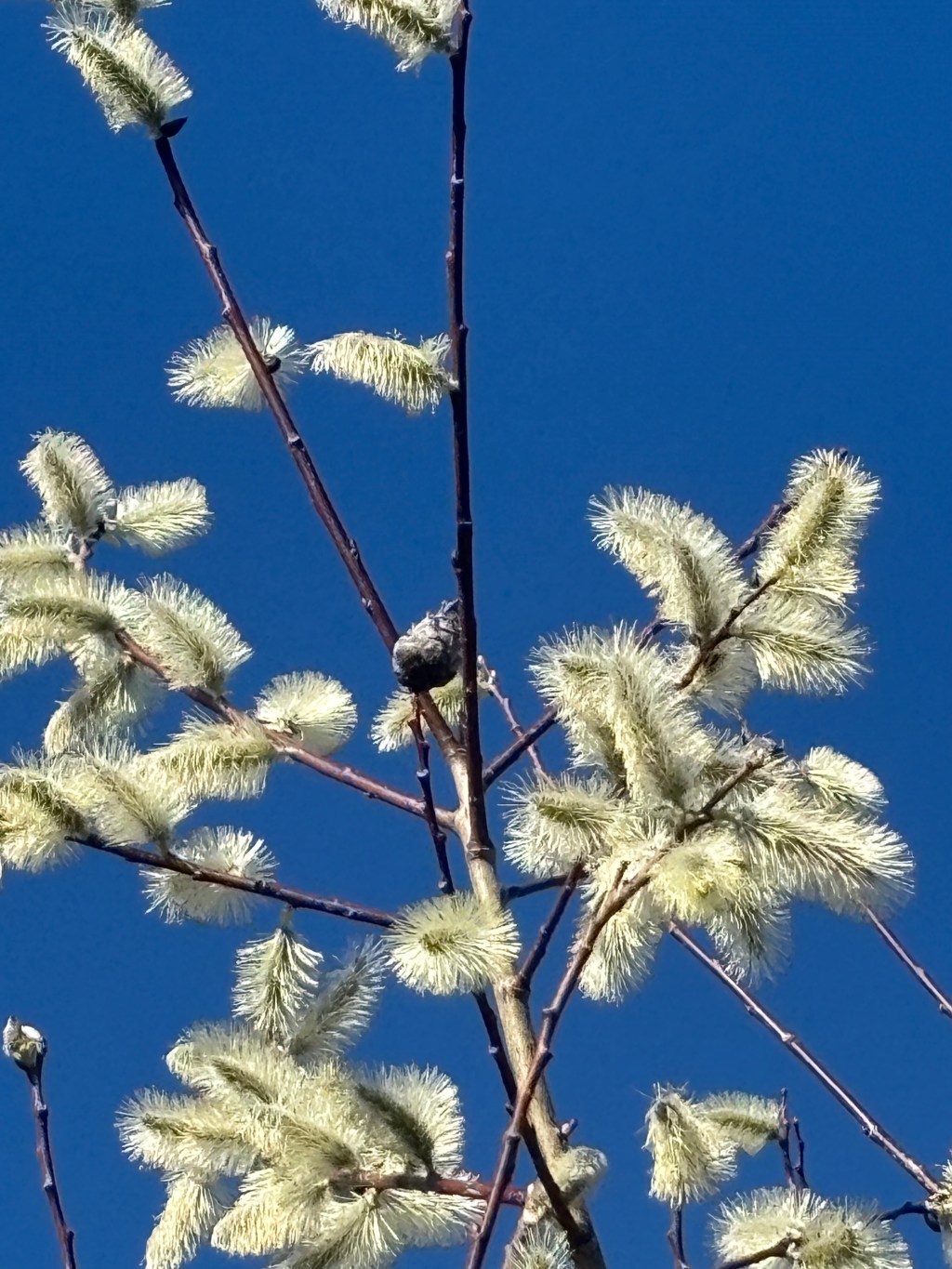
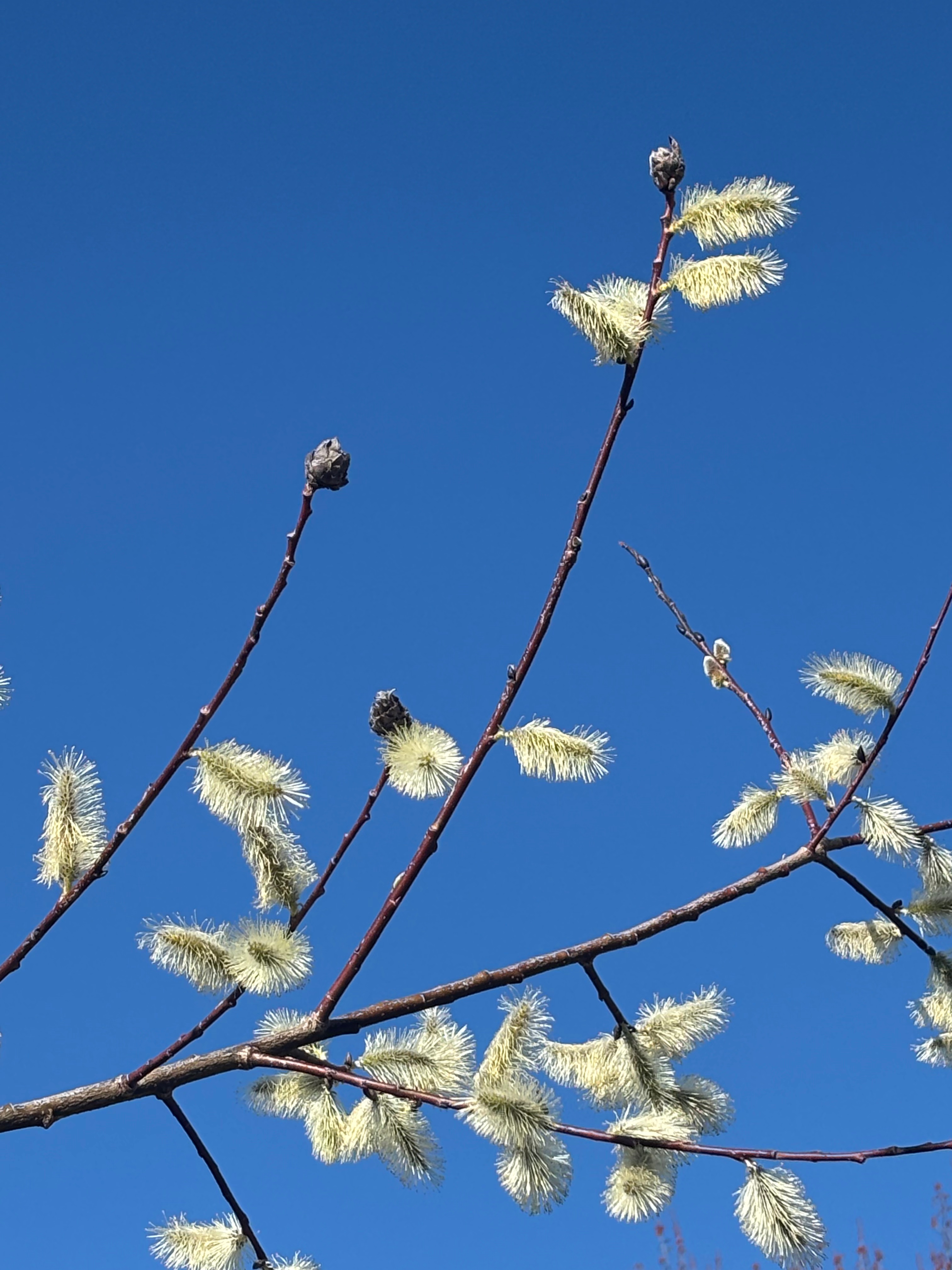
 The time for noticing little things is spring. The branches are still bare enough to see the ants crawling up to the most unassuming flower buds. At least five types of bees are visiting the alien caterpillar-like flowers of the pussy willow. I don’t even know which species it is – maybe it’s the North American Grey Willow (Salix discolor), or the Northern European Goat Willow (Salix caprea). Standing on my driveway I began to notice that my pussy willow has strange pine cone-like structures at the ends of some branches. I think that a lot of people might think that a gall needs to be dealt with. In fact, if you look it up online, you’ll learn that these galls make up an important part of the diets of many native bird species, including the black-capped chickadee (Poecile atricapillus). Plus, they look cool – like pine cones, as the name implies. Like if pine trees could grow bright yellow sunflowers. Using chemicals, this innovative insect fools the tree into producing this structure as a home for its babies!!! The Willow Pine Cone Gall Midge. Genius, innovator, inventor. Food for birds.
I’m not too embarrassed to admit that I planted these pussy willows due to nostalgia, the most toxic impulse. My mother always had pussy willow branches in a vase at Easter. She would decorate them with some elegant decorations. Actually I can’t even remember what it looked like – yellow feathers maybe? But she was so organized, and she tossed them after Easter. I’m a mess. My pussy willows stay in the moldy vase for weeks after Easter. That’s how I discovered that those furry little buds turn into insane yellow flowers that look like caterpillars. And the pussy willow, being a willow, grows roots very easily. You could even say it is invasive. In fact, if you want to propagate some plant by taking cuttings, you can use a willow branch to encourage roots to form.
The pussy willow is a true marvel. It’s a beautiful plant that feeds many bees in the spring. With the help of the Willow Pine Cone Gall Midge, now I know it is also feeding birds.


Leave a Reply